
Article
Open Enrollment vs. Special Enrollment: Do you know the difference? Which One Applies to You Right Now?
September 2, 2026
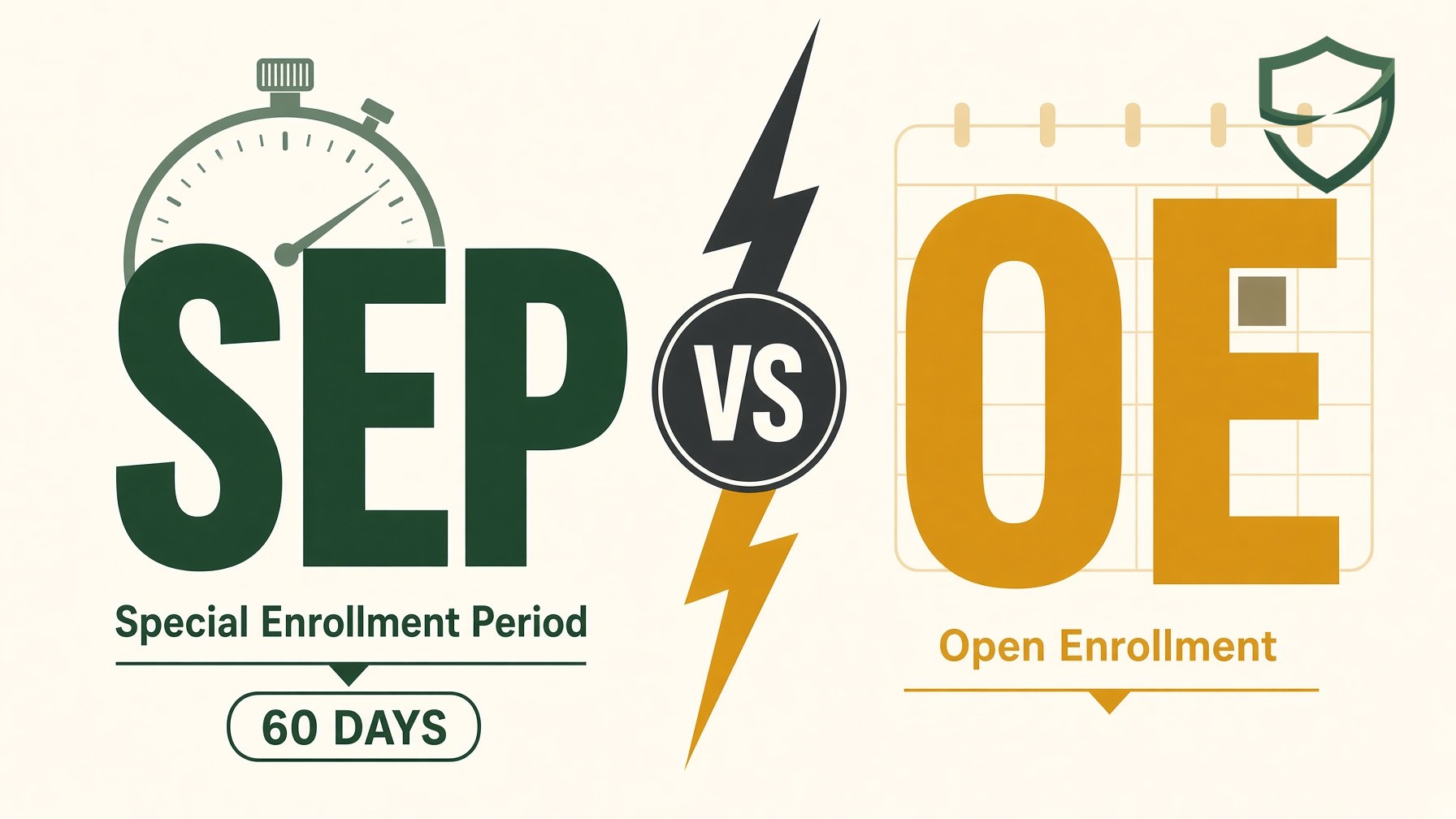
Confused about open enrollment vs. Special enrollment, Here’s the difference between Open Enrollment and a Special Enrollment Period — and how to tell which one you’re in.
Every fall, I get some version of the same question: “Wait, can I even sign up for health insurance right now, or do I have to wait?”
The honest answer is: it depends on which kind of enrollment window you’re in. And most people have never heard of the second one, which is a problem, because it’s often the one that actually applies to them.
There are two separate paths into health coverage outside of your employer, and they work completely differently. Mixing them up is how people end up either waiting months for coverage they could have gotten today, or missing a deadline they didn’t know existed.
Open Enrollment: The One Everybody’s Heard Of
Open Enrollment is the annual window when anyone can sign up for or change an ACA Marketplace health plan, no explanation required. For most states, including Virginia, that window runs from November 1 through January 15.
During Open Enrollment:
- You don’t need a reason or a life event
- Coverage that starts January 1 requires enrolling by December 15
- Anyone can enroll, switch plans, or drop coverage
- Once the window closes, it closes for everyone
This is the one people are usually thinking of when they say “open enrollment season.” It’s calendar-based, predictable, and the same for every household in the country.
Special Enrollment Period: The One Most People Miss
A Special Enrollment Period, or SEP, is different in almost every way. It’s not tied to the calendar at all, it’s tied to you. Specifically, it’s triggered by a qualifying life event, and once that event happens, you typically have 60 days to enroll before the window closes.
Common events that trigger an SEP include:
- Losing job-based health coverage
- Getting married or divorced
- Having or adopting a child
- Moving to a new coverage area
- Losing eligibility for Medicaid or CHIP
- Income changes that affect subsidy eligibility
Unlike Open Enrollment, an SEP can happen at any point in the year, March, July, September, it doesn’t matter. The trigger is the event, not the date on the calendar.
The Mistake People Make
Here’s where the confusion causes real problems: people assume that if it’s not November through mid-January, they’re simply out of luck until next year. So they don’t even check. They go without coverage, assuming there’s nothing to be done, when in reality they may be sitting inside a 60-day SEP window right now because of something that happened just a few weeks ago.
The reverse mistake happens too, people assume every life change automatically gives them unlimited time to sort out coverage, and they let the 60-day clock run out without realizing it was ever ticking.
Both mistakes come from the same root cause: nobody explains the difference clearly, and by the time it matters, there’s no one reminding you.
A Simple Way to Tell Which One You’re In
Ask yourself one question: did something specific change in my life recently, job, marriage, baby, move, or am I just realizing I need coverage with no particular trigger?
If something changed, you’re likely looking at an SEP, and the clock started the day it happened, not the day you noticed. If nothing specific changed and you’re simply evaluating your coverage, you’re working within Open Enrollment and need to act by January 15.
The tricky part is that SEP eligibility rules have specifics, what counts as a qualifying event, how the 60 days are counted, and what documentation is required can vary. That’s usually the fastest thing to just ask about rather than guess.
Why This Actually Matters for Your Wallet
Beyond the deadline itself, both paths can open the door to ACA subsidies that significantly lower your premium, sometimes far more than people expect, especially if your income changed along with your life event. A lot of people who think they make “too much” to qualify are surprised to find out otherwise, particularly right after a job change or a shift to self-employment.
Skipping the check because you assume you don’t qualify, or assume you missed your window, is usually the more expensive mistake.
If You’re Not Sure Which Window You’re In
If you’ve had any kind of life change recently, or if you’re just not sure whether you’re looking at a 60-day SEP clock or a wait until November, it takes about 15 minutes to find out where you actually stand and what you might qualify for.
Not sure which enrollment period applies to you? Book a free, no-obligation call and I’ll help you figure out your window and your options.
Related reading: for every deadline, subsidy rule, and plan decision in one place, see Open Enrollment: Every Deadline, Rule, and Decision You Need to Know.

Authored by Austin Wilson
Licensed insurance agent and founder of Scudo Benefits Group, serving DC, FL, MD, MI, OH, TX and VA. NPN 22224104 · VA License #1585974
Questions about your coverage? Call (571) 571-1491 or email austinw@scudobenefitsgroup.com.